01 Song / Made here
A song needs another singer
Sevdalinka has its place on a UNESCO list. The more interesting question is what happens when somebody learns it, changes it and sings it again.
Nada Mamula, “Kolika je Jahorina planina”. Jugoton YM-318, 78 rpm disc. Transfer from the Internet Archive, National Film and Sound Archive of Australia 78rpm Collection. 0:00 / 3:02
A recording fixes the choices a singer made on one occasion.
The song came before the speeches. On 4 December 2024, at a Federal Ministry of Culture and Sports press conference celebrating sevdalinka’s UNESCO inscription, Mensura Bajraktarević sang “Kraj potoka bistre vode”. That is how the ministry’s account begins: with a named performer and a particular song, before the officials explain the achievement. It is a useful order in which to approach the music. Start with somebody singing. The certificate can wait.
UNESCO describes sevdalinka as urban singing shaped by the meeting of South Slavic oral poetry and Ottoman musical influences. It can be performed unaccompanied or with instruments. Its essential work is storytelling. The designation covers a practice shared by amateur and professional singers, rather than a definitive arrangement against which every subsequent performance must be measured. Younger family members learn by imitation, then introduce variations of their own.
That last detail deserves more attention than it usually gets. Learning an old song does not require leaving your own voice outside it. The choice of where to breathe, how long to hold a word and how directly to address a listener can change the encounter. Those are things to listen for, rather than a test of whether a performance sounds sufficiently old.
Damir Imamović offers a particularly clear example of how inheritance can involve deliberate study. His grandfather was Zaim Imamović. Yet the younger singer’s route into professional music included work with Farah Tahirbegović on a monograph about Zaim in 2004, after studying philosophy. The biographical account published by the University of Toronto’s Hart House puts research alongside family connection. He subsequently developed SevdahLab, an educational programme, and curated the Sarajevo exhibition Sevdah, the Art of Freedom in 2015.
He has also worked on the instrument in his hands. Buybook’s account of his practice describes a collaboration with saz maker Ćamil Metiljević and guitar maker Mirza Kovačević to create the tambur, bringing together qualities of saz and guitar. Here, the argument for change takes physical form: a musician and two makers working out what an instrument might allow him to do. His book Sevdah, available in English, approaches the genre through its musical, poetic and cultural history.
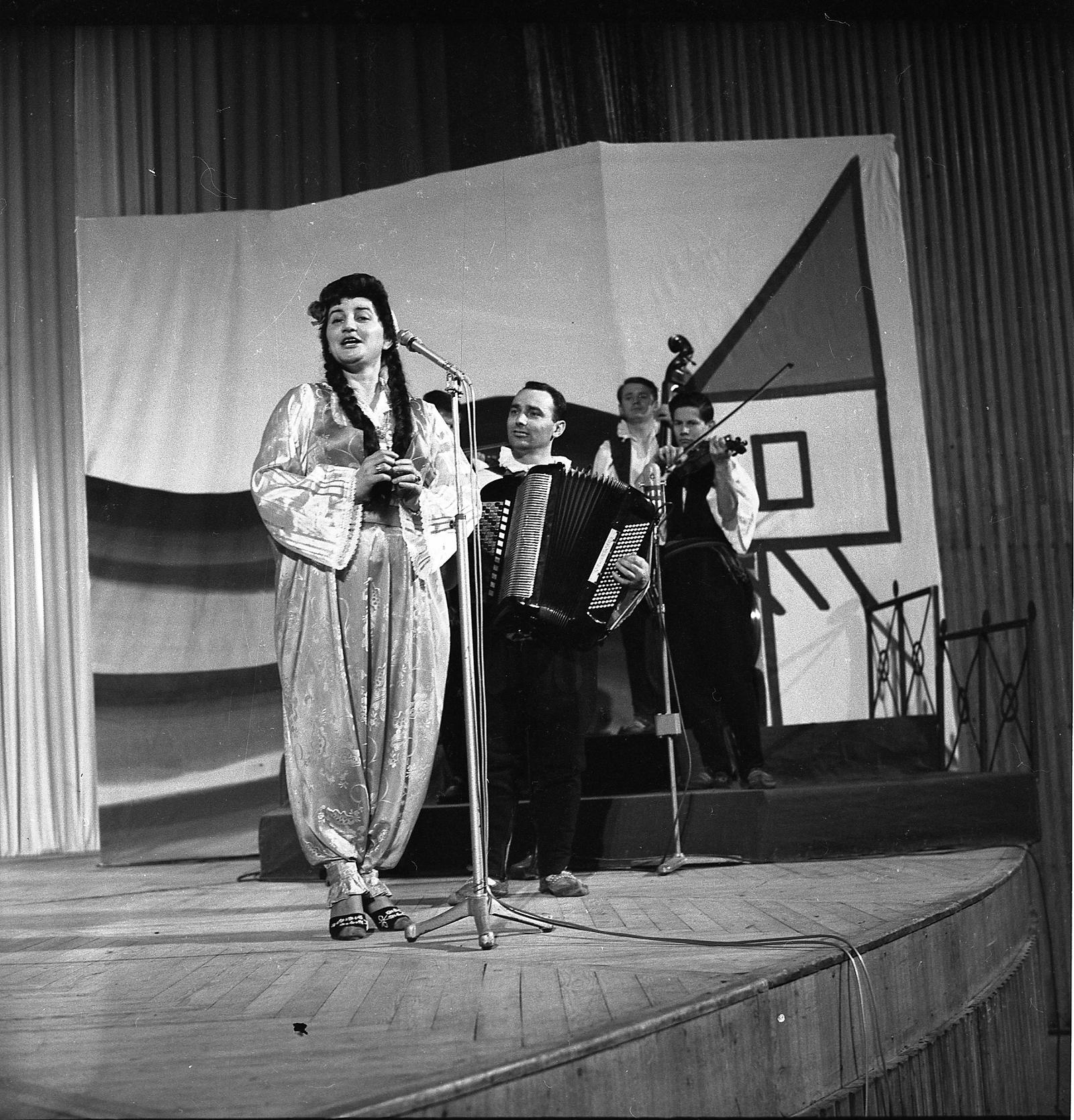
Set that activity beside the archive photograph in this issue. Stevan Kragujević photographed Nada Mamula in Sjelo na vrelu Bosne in 1962. The archive identifies a television programme, not an anonymous glimpse of an untouched past. Mamula was appearing before cameras. The picture belongs to the history of how this music was presented to an audience, as well as to the history of the singer herself. It does not tell us which song she is singing, or how that moment sounded.
A useful first listening session need not become a survey of the entire tradition. Choose one song. Read its words, or a reliable translation. Then listen to two singers perform it. Notice which words become important, where the pace changes and what the accompaniment leaves exposed. These are invitations to compare, not instructions to declare a winner.
A recording fixes the choices a singer made on one occasion. A second version puts those choices back into question. After that, even a familiar song can become less predictable: you begin to hear where one performer follows a predecessor and where another takes a different turn. The song stays recognisable. The singer matters.
Back to the cover